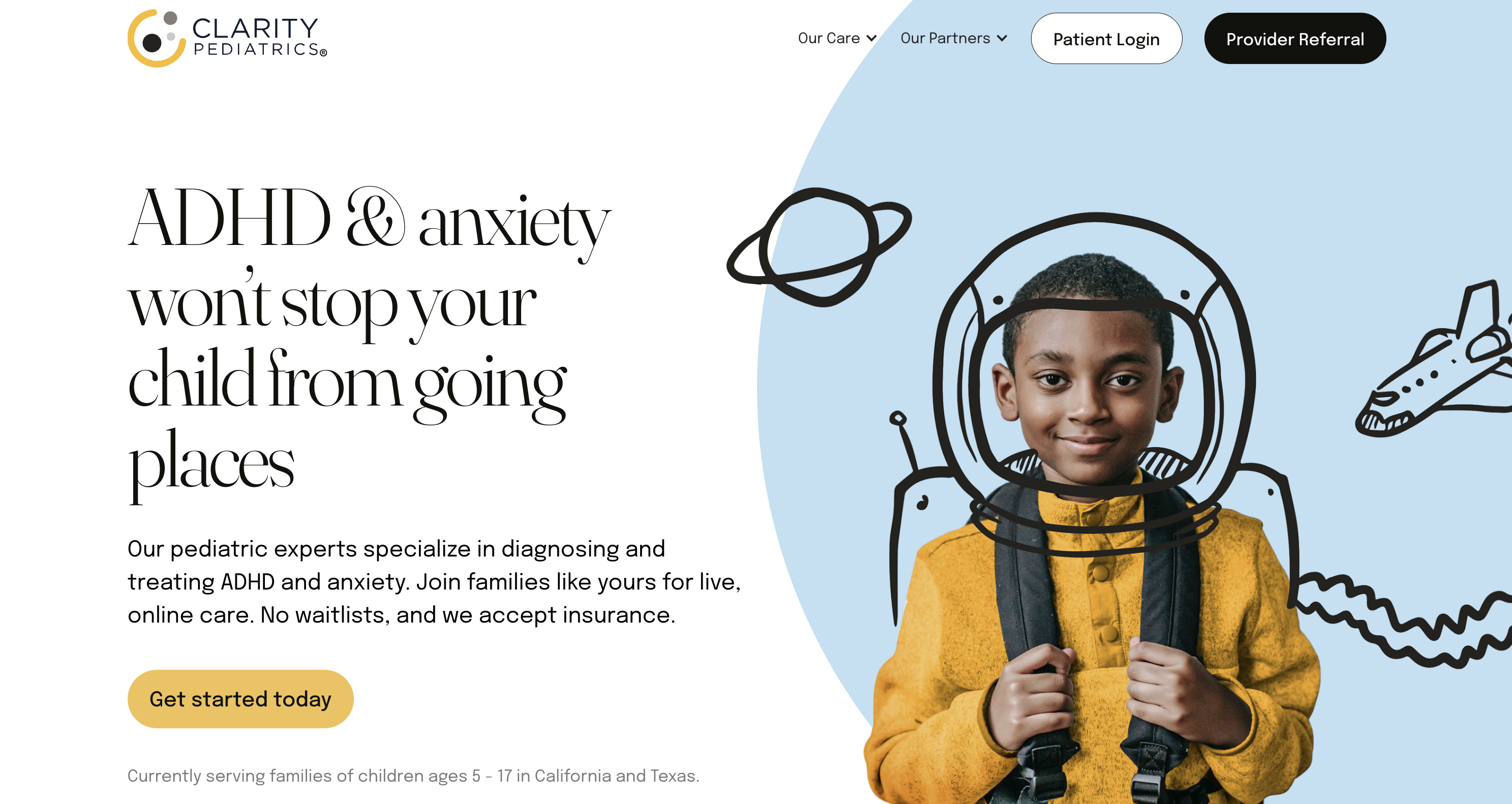
Christina LaMontagne and pediatrician Dr. Alesandro Larrazabal founded Clarity Pediatrics after seeing the same problem from different angles: children with common chronic conditions were waiting months for appropriate care, while parents were left to coordinate clinicians, schools, insurers and treatment decisions. ADHD became the first focus because the gap between evidence and access was especially visible there.
A specialist shortage felt at home
The company began in 2022 as a virtual pediatric practice, not simply a directory or wellness app. Its clinicians provide assessment, medication management when appropriate and behavioral support. The remote format removes geography from many visits, but the more consequential choice is organizational: Clarity assembles the pieces of a care pathway that families might otherwise have to find separately.
Using group care without making care generic
One of Clarity's central programs is behavioral parent training, an approach recommended by the American Academy of Pediatrics for younger children with mild-to-moderate ADHD. Rather than placing every child into weekly one-to-one therapy, the program teaches parents practical strategies for routines, focus and emotional regulation in structured groups. TechCrunch reported that this model helped the company reduce the time from seeking help to beginning care from months to days.
Affordability is built into the positioning. Clarity says it has worked with both commercial insurers and Medicaid from the beginning, and its founders describe insurance coverage as part of clinical access rather than an administrative afterthought. That decision adds complexity—payer relationships, state licensing and careful patient communication—but it also makes the service relevant to families who could not sustain repeated out-of-network bills.
From ADHD to a chronic-care platform
In April 2024, Clarity announced $10 million in seed funding after serving thousands of California families. The company expanded to Texas and added anxiety care. A $14.5 million Series A announced in late 2025 brought its reported total funding to roughly $25 million and supported a move into pediatric obesity care, another area where families can face fragmented specialist access and emotionally difficult conversations.
Clarity's opportunity is larger than putting appointments on video. Its model depends on convincing parents that virtual care can still be rigorous, reassuring pediatricians that referrals lead to guideline-based treatment, and showing insurers that access and outcomes can improve together. In a healthcare category where searchers arrive worried and skeptical, the clarity promised by the name has to be demonstrated at every step from the first page to the continuing-care plan.